Most sustainability programs are inventories of isolated fixes. Orchid City is the working proposition that the fixes only function when a city is rebuilt around the way living systems already operate.
Case study9 min read
In July 2021, after twenty-two years of applied work and more than 600 projects shaped by the Symbiosis in Development framework, Tom Bosschaert published an integrated proposition. Not a building, not a district, not a policy paper. A complete operating model for human settlement that targets 140% net-positive performance: a place that produces more energy, water, food, and ecological value than it consumes. The proposition is called Orchid City. The years since have been the slow business of making it real.
The arithmetic of single issues
Most corporate sustainability programs operate as parallel tracks. A net-zero building team. An energy procurement team. A circularity working group. A biodiversity advisor. A social impact officer. Each track is competent, each is measured against its own metric, and each, by design, has no visibility into the others.
The trouble is that the metrics are not independent of each other. A net-zero office tower inside a city that imports four-fifths of its food, discards two-thirds of what it imports, and burns its residual waste is, in any honest accounting, not sustainable. The tower is doing its job. The system the tower sits inside is doing the opposite.
Orchid City began as a response to that arithmetic. If the failure mode of urban sustainability is fragmentation, the design intervention has to be at the level of the system, not the level of the component. The framework refuses to treat a city as a sum of certifiable parts.
“
A net-zero building inside a city that imports its food and burns its waste is not, in any honest accounting, sustainable. The building is doing its job. The system the building sits inside is doing the opposite.
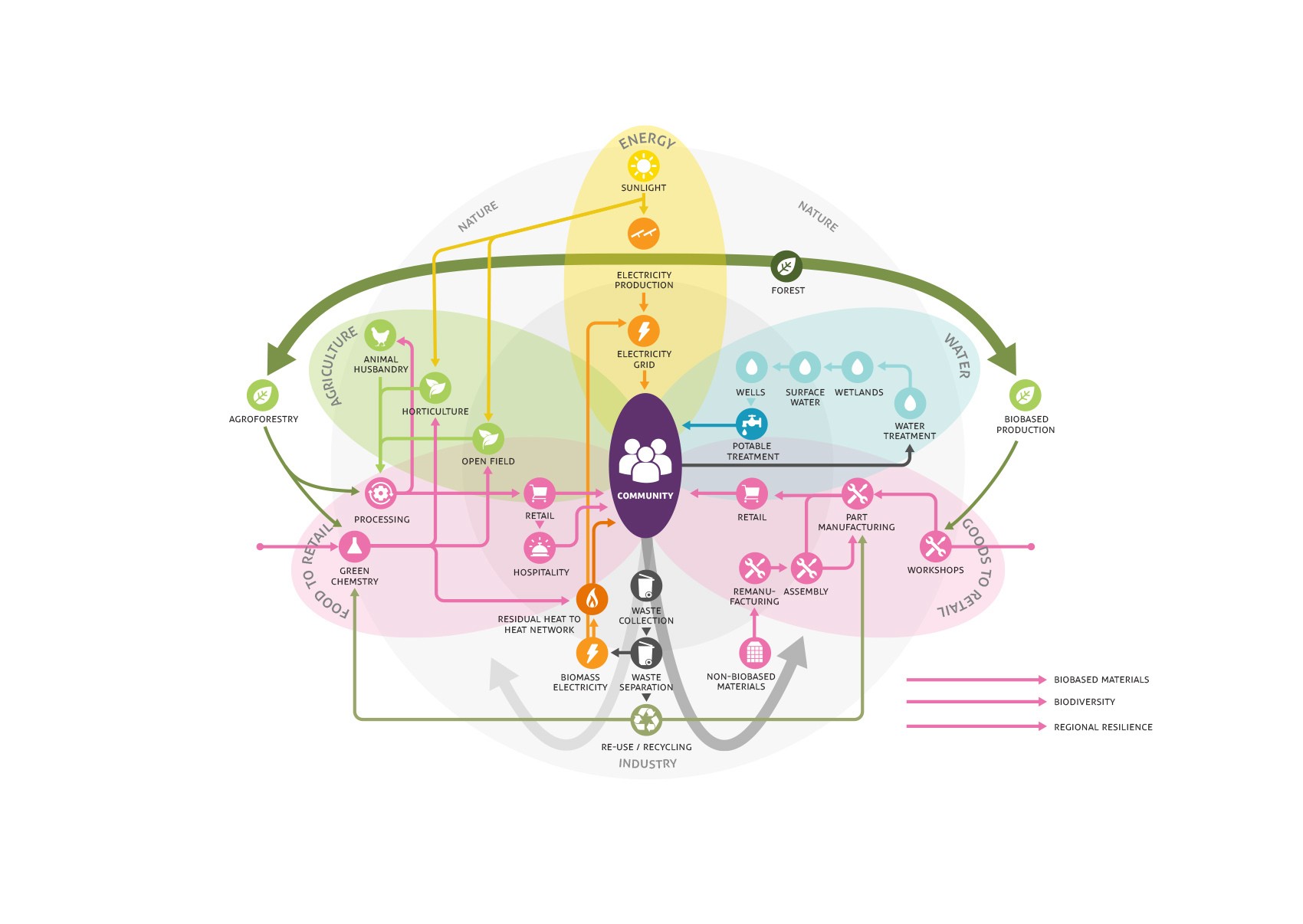
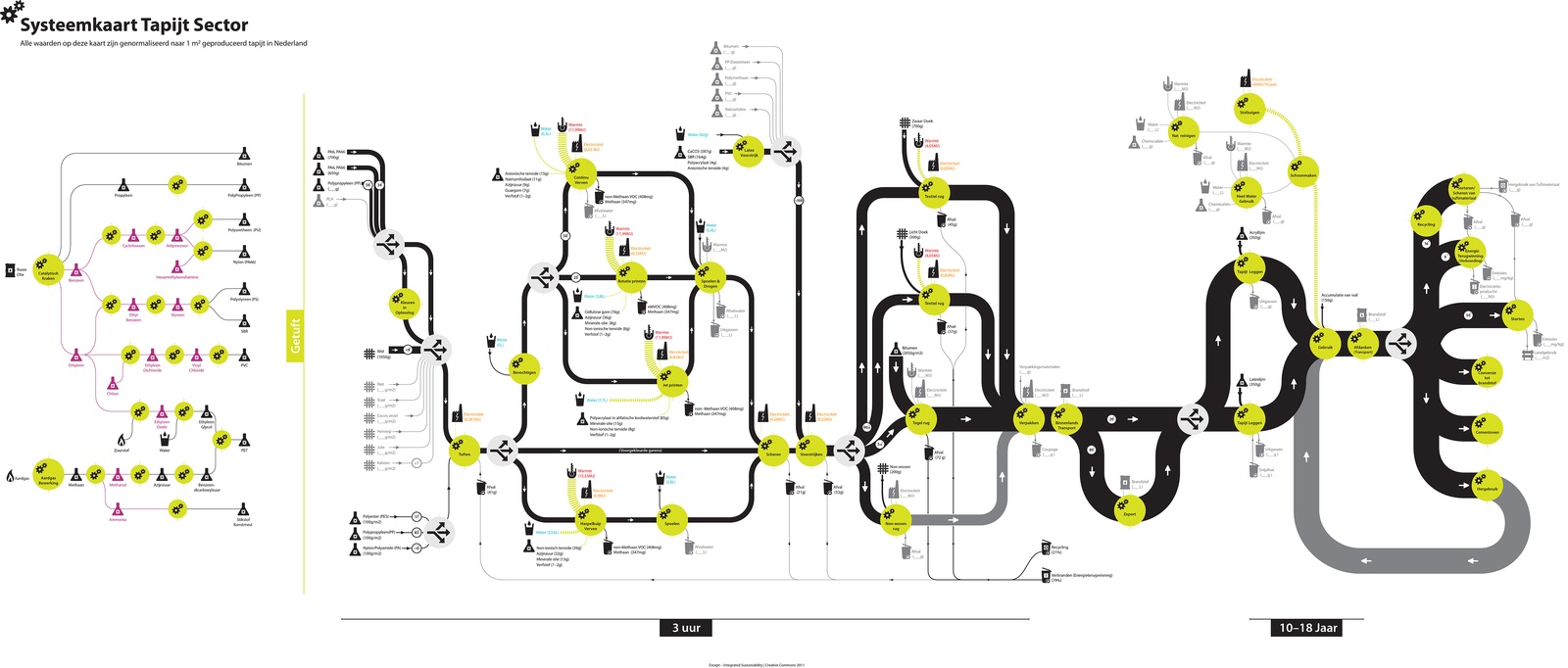
The Orchid City metabolic diagram: energy, water, food, materials, and human ecology held in the same system rather than addressed as separate problems.
What the framework actually proposes
Orchid City is a settlement framework that integrates five domains usually held apart: energy, water, food, materials, and human ecology. Each domain is closed-loop where the physics allows, and tightly coupled where it does not. The framework is not a template. It is a method for designing a place such that the flows between domains become productive rather than wasteful.
The 140% performance figure is a working target, drawn from modeling on reference sites across multiple continents. It refers to net production across the five domains, integrated over a multi-decade operational period. The 40% headroom is what makes the model economically viable. The city produces more than it needs, exports the surplus, and the surplus is what underwrites the up-front infrastructure capital.
That structural surplus matters for the audience the framework is designed to address. A board considering exposure to integrated urban development is not, in the first instance, evaluating ecological performance. It is evaluating duration, risk, and the alignment between operational cash flows and a multi-decade liability profile. Orchid City was built to be readable on those terms.
At a glance
140%net-positive integrated performance target across five domains
25+partner organizations active in the consortium
600+SiD-framework projects shaping the model since 1999
5domains in one model: live, work, produce, play, prosper
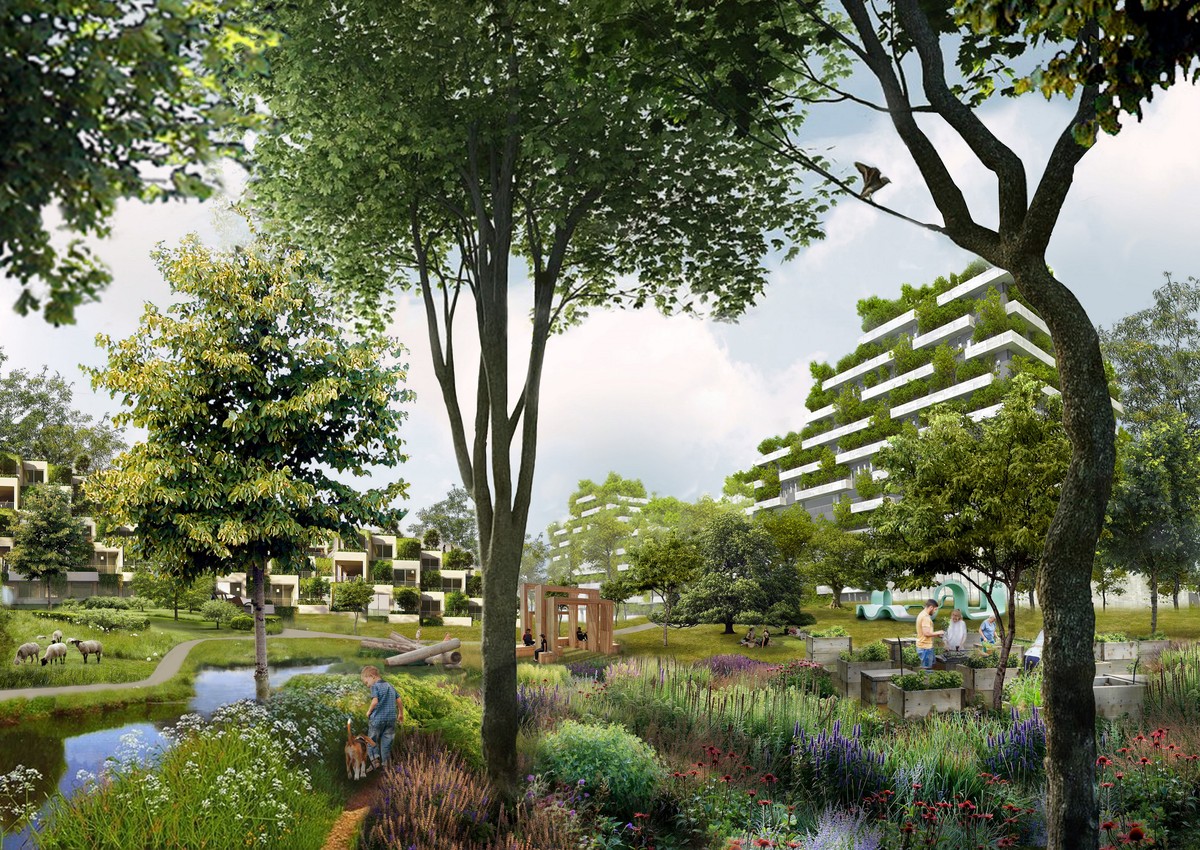
Reference site visualization: housing, productive landscape, and shared infrastructure designed as one continuous system.
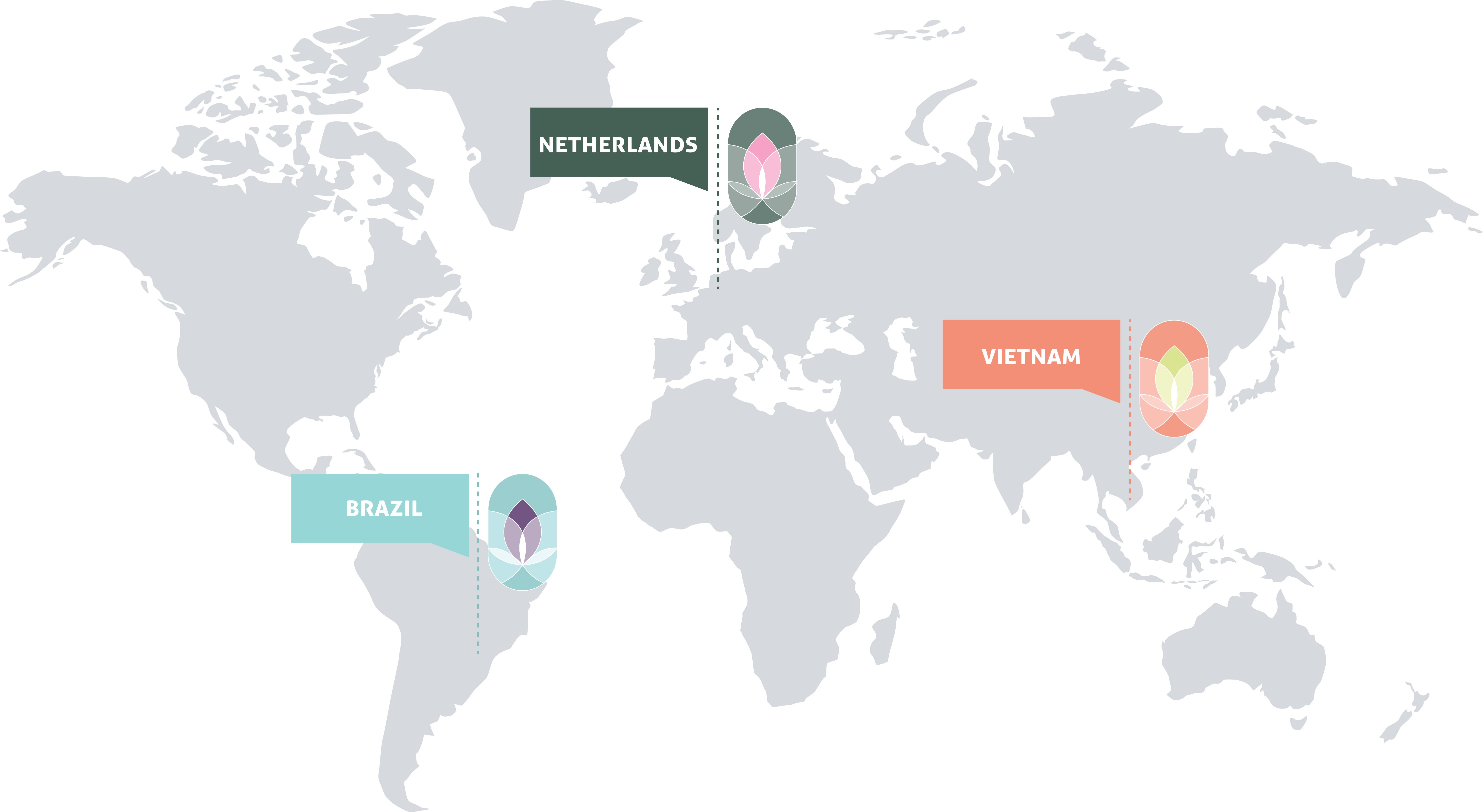
Geography of active and prospective reference sites. The framework stays constant; the path through it changes by climate, hydrology, and regulatory environment.
Method: Symbiosis in Development
The method is Symbiosis in Development, the systemic framework Except has developed since 1999 and applied across more than 600 projects in real estate, agriculture, water systems, materials, and energy. SiD treats every site as a network of interdependencies. The work begins with a complete mapping of those interdependencies, not a parallel list of issues to address. The mapping produces the design.
For Orchid City specifically, the working team is led by Emma Westerduin (architect and project manager), Jacob Verhaart (industrial ecologist and head of science), Eranda Janku (urban planning), Chi Nguyen (regional director for Asia), Mykola Liasovskyi (research and business development), and Ruben Bosschaert (technology and research, trained as a physicist). The composition of the team is itself a working statement about what integrated urban design requires. Architects and ecologists sit at the same table. Physicists and planners read the same data.
The design output is not a single document. It is a layered set of analyses: a metabolic diagram showing how energy, nutrients, and materials move through the place; a stakeholder graph showing who needs what from whom; an economic model showing how the surplus from one domain underwrites the capital cost in another; and a spatial design that resolves all three.

Generational proximity built into the spatial design: housing, care, and work held within walking distance of each other.
The consortium
Orchid City operates through a consortium of over 25 organizations: developers, municipal authorities, technology providers, research institutions, agricultural specialists, and investment vehicles. The consortium is not a marketing alliance. It is the supply structure for an integrated build. Each partner contributes a domain-specific capability that fits the systems map, and the map governs how the contributions interlock.
One consequence of that structure is that no partner carries the full delivery risk. The framework distributes both the work and the exposure across the consortium, with the systems map providing the contractual logic. Boards evaluating partnership often note this point first. In conventional megaproject delivery, integration risk concentrates on a small number of principals. In Orchid City, integration is the shared product.
The principle of intergenerational proximity sits inside the spatial design rather than alongside it. The position taken by the team is that any community calling itself sustainable has to ensure that generations remain close, physically, economically, and in the practical mechanics of daily care. Cities designed around economic specialization tend to separate the young, the working, and the old into different geographies. Orchid City designs against that separation, on the argument that resilience is a property of the connection itself.
“
One of the most fundamental goals of any serious sustainable community is to ensure that generations remain close. Resilience is a property of the connection, not of the parts.
The economic argument
Orchid City costs more per square meter at construction than a conventional development of comparable density. The infrastructure investments in closed-loop systems, integrated food production, district energy, and water reuse front-load capital that a conventional development defers, externalizes, or never makes at all.
The economic argument is on the operational side. Energy, water, and food costs trend toward zero across the operating life of the asset. Maintenance is lower because the systems are designed for closed-loop efficiency rather than replacement cycles. The structural surplus, the 40% headroom, becomes revenue. For institutional investors holding multi-decade liability profiles, the duration alignment is what makes the asset class legible. Pension funds, sovereign wealth, and patient infrastructure capital are the natural counterparties.
The risk profile is also different from a conventional development. Single-issue exposure (a carbon price shock, a water tariff change, a food supply disruption) is absorbed inside the system rather than passed through to the resident or the operator. The integrated design is what produces that absorption, and the absorption is what the financial model is selling.
Scaling without losing the model
The framework is not infinitely scalable. Some integration loops only close at certain population densities. Below a threshold, internal demand is too small to make the loop economically viable. Above another, the social and ecological coordination cost rises faster than the technical performance gains. The constraint is not a limitation in ambition. It is what the systems modeling reveals about the size at which an integrated city actually works.
What transfers across sites is the method, not the artifact. A new project does not begin by importing a layout from a previous one. It begins with a new metabolic diagram, calibrated to local hydrology, climate, supply structure, and cultural pattern. The 140% target stays constant. The path to it changes. The Orchid City brochure, published at orchidcity.eco, sets out the specifics for boards and investment committees considering exposure to integrated urban projects.
The conversation that follows the brochure tends to be longer than the brochure. That is by design. Single-issue sustainability is, in the end, a vocabulary. Orchid City is an argument that the vocabulary has been measuring the wrong things, and a working demonstration of what a different measurement produces.