A vision, strategy, and roadmap to fully circular and energy-neutral operations, built across seventeen people, three days, and the year of patient alignment that followed.
Case study9 min read
The brewing industry runs on cycles. Grain to beer to bottle to consumer to recovery and back to grain again. By 2018, Heineken Nederland had spent a decade tightening each of those loops on its own terms, with results that met internal targets without disturbing the logic underneath them. Then a question arrived in a planning session in Zoeterwoude that the existing approach could not answer: what would it take to close every loop at once, including the loops the company had not yet recognised as loops at all.
The pressure from outside, and from within
Two forces had been gathering for years, and by the start of 2018 they had moved from background condition to operational concern. The first was generational. Younger consumers in the Netherlands and across Europe were sorting brands on criteria that did not appear on a price tag, and the sorting had begun to register in market share. The second was regulatory. Dutch and European legislation on single-use plastics was tightening on a timeline measured in quarters rather than decades, with penalties that would matter at scale.
What the brief framed as a challenge, Heineken's leadership read as an opening. A company that arrived at circularity ahead of the regulation would set the terms of the regulation. A company that arrived after would inherit them. The decision to commit was strategic before it was environmental, and the boardroom case for it was made in those terms.
There was a third pressure, less discussed, more difficult. It came from within. A decade of sustainability programs across the Dutch operations had produced an enviable list of initiatives and an unfamiliar problem: improvement was no longer additive. Each new project competed for governance time, capital, and management attention with projects already in motion, and the net effect on system-level performance had become harder to measure with each addition. The portfolio worked. The system underneath the portfolio did not yet, and adding more projects would not change that.
This is the moment most decarbonization programs reach and few resolve. It is the gap between a sustainability function that runs projects and a business that operates as a system. Closing that gap is rarely a technical problem. It is a problem of how a company sees itself.
“
Sustainability, health, and happiness are increasingly demanded by consumers, particularly by younger generations, and Heineken is at the forefront of several exciting, society-wide transitions.
Heineken Nederland's operations supplied the data, the constraints, and the personnel for the program. The systems map was built from the inside out.
Three days, then a year
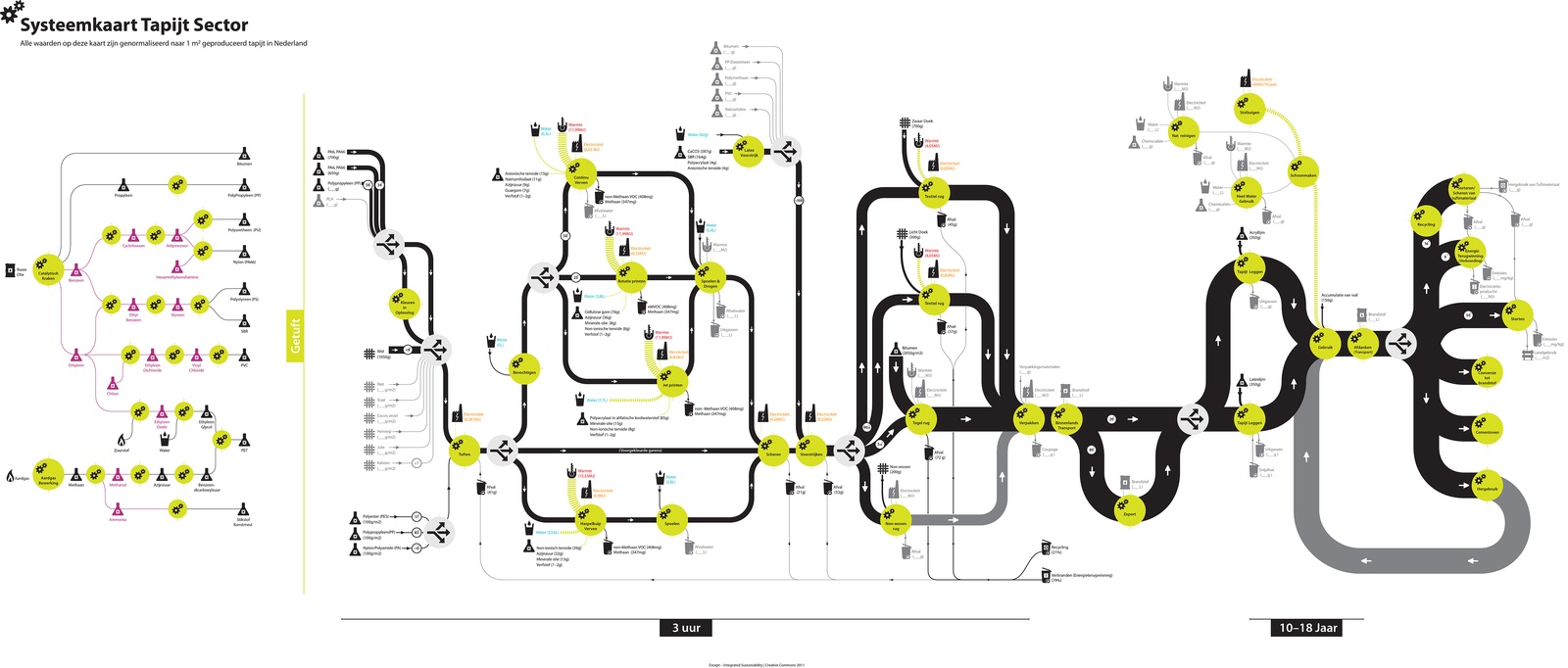
Yvoke entered through Except, the practice that has carried the Symbiosis in Development framework since 1999. SiD treats sustainability not as a list of impacts to be reduced but as a question about how a system stays viable across time. Energy, water, materials, biodiversity, and human well-being enter the analysis at the same table, because operationally they already constrain each other whether or not a company has named the relationship.
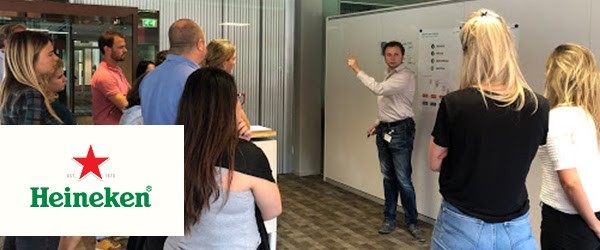
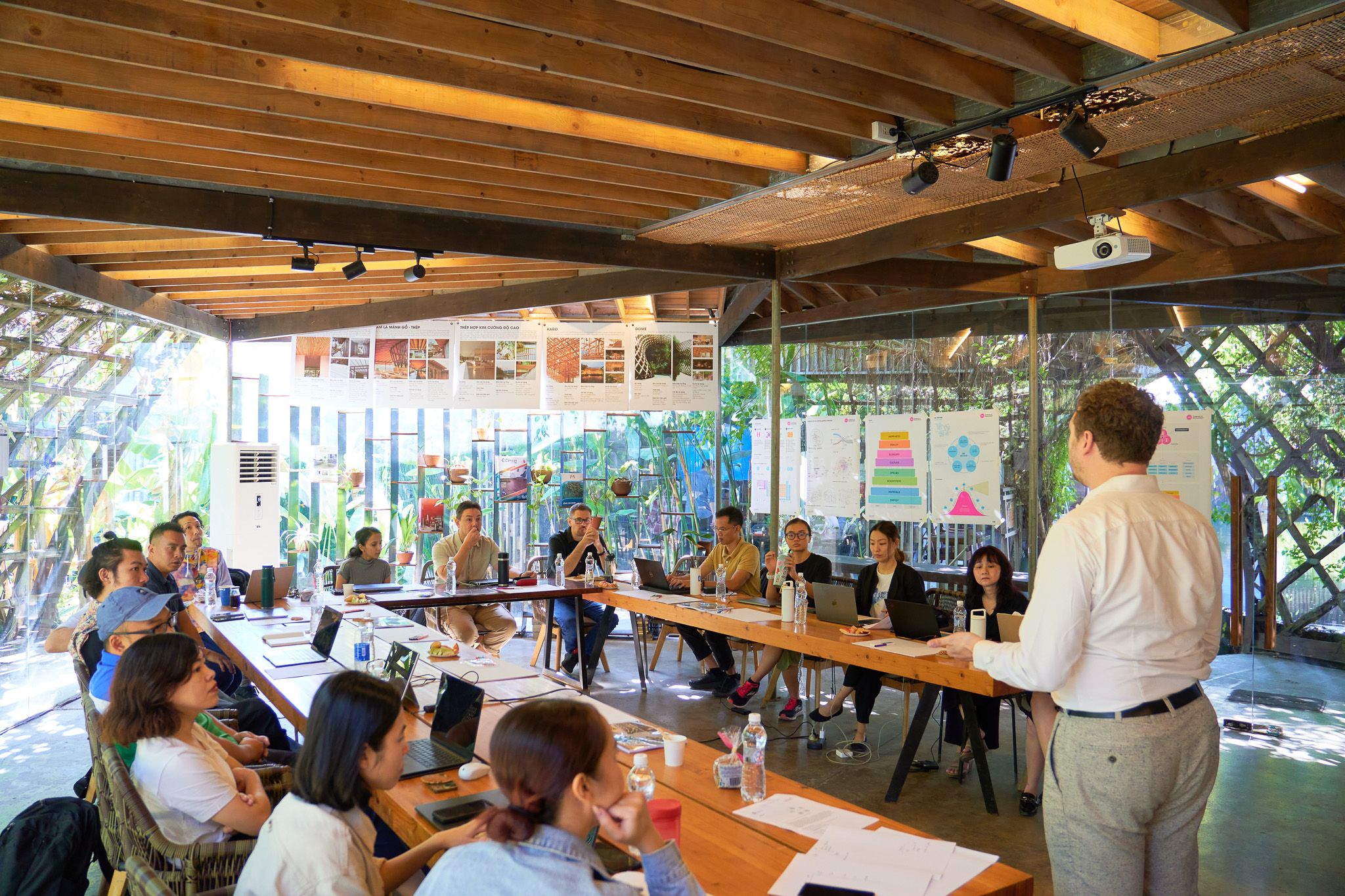
The program began with a three-day session in 2018 that brought seventeen people into one room: leaders from Heineken Nederland and Heineken Nederland Supply, alongside industrial ecologists, architects, and strategists from Except. The brief for those three days was narrow by design. Identify, with specificity, where the company could reduce negative impacts and increase positive ones across the full system, not the project portfolio.
Three days produced a map. The year that followed turned the map into a roadmap. Detailed task alignment ran across business units, supplier conversations, governance redesign, and the slower work of matching ambition against operational reality. The output was not a vision document. It was a sequence of decisions, with owners, timelines, and dependencies, calibrated to deliver fully circular and energy-neutral operations on a horizon ending in 2030.
Program at a glance
17multidisciplinary team members across HNL, HNS, and Except
12+circular sub-projects emerging within the first year
2030roadmap horizon for full circularity and energy neutrality
600+projects applying the SiD framework since 1999
The systems view: industrial flows and ecological flows examined inside one analytical frame.
The downstream view: a circular brewery's outputs become measurable inputs to the region around it.
Tom Bosschaert led the program for Except, with architects, industrial ecologists, and strategists from both organisations.
Twelve projects that did not exist before
A roadmap is a document. What a roadmap produces, when it is doing its work, is initiatives that would not have appeared on any individual department's plan. The Heineken program produced more than twelve of them within its first year, several taken forward by the company alone and several taken forward in partnership with Except.
One example: the festival problem. Heineken's brands appear at large-scale music events across Europe each summer, an operating context that generates substantial quantities of single-use cups, bottles, and promotional material in concentrated bursts of time. A circular-economy lens treated this not as a recycling-volume problem but as a design problem. The sub-project redesigned the festival material flow from supply through service to recovery, with several solutions tested in partnership with operators and venues.
The festival work mattered less for its direct impact than for what it demonstrated. A material-recovery question, examined inside the SiD frame, became a question about brand presence, event design, supplier choice, and consumer behaviour in roughly that order. The answer was different from the answer a procurement team would have produced alone. The economics were also better.
“
The portfolio of sustainability projects worked. The system underneath the portfolio did not yet, and no number of additional projects, run on the old logic, would have changed that.
Eleven other sub-projects ran on parallel logic. Several addressed energy, aligning the circular roadmap with the company's transition to 100% renewable energy so that the two programs reinforced rather than competed for capital and management attention. Others addressed water, climate positivity, biodiversity, and the harder-to-quantify dimensions the SiD framework insists on holding in the same view: connectivity, inspiration, health, and well-being. A circular brewery wastes less. It also makes the region around it measurably better off, by design rather than by accident.
The figures matter because the figures travel. A roadmap with targets through 2030 across waste, water, climate, and biodiversity gives every department a referent it can plan against without waiting for the next strategy cycle. Procurement teams can act on it in February. Capital planners can incorporate it into the autumn budget round. Operators can use it on a Tuesday morning. The roadmap, once written, becomes the slowest-moving thing in the building, which is precisely what a long-horizon program requires of its core document.
What transfers, and what does not
The Heineken roadmap is calibrated to the brewing industry, to a Dutch operating footprint with specific supplier geographies, and to a company that had already built a decade of sustainability capability before the program began. Lift the roadmap unchanged and apply it to a fashion retailer or a logistics operator, and very little of it would survive contact with the new context.
The approach transfers. Start with the system, not the portfolio. Bring the people who run the operations into the same room as the people who measure the impacts, for long enough that they begin to use each other's language without translation. Use a framework that holds materials, energy, water, biodiversity, and human well-being inside one view, because operationally they are already in one view whether anyone has named the relationship or not. Move from the highest-leverage relationships outward, and treat each conversation, with a supplier or a regulator or a colleague, as a data-gathering exercise as much as a negotiation.
That sequence has run in different industries across more than six hundred projects since the framework was first used in 1999. The Heineken program is one of the longer and more visible applications. It is one of many. The next one will look different in every respect except the underlying logic, and that is the part worth keeping.