
Systemic grantmaking: redesigning how philanthropy creates impact
The IKEA Foundation funds agricultural livelihoods programs across Africa and India. The question was whether grants could be structured to shift systems, not just support beneficiaries.
Key result
New systemic grantmaking framework with system maps identifying leverage points for smallholder livelihoods
Philanthropy has a structural problem. Most grantmaking is project-based: fund a specific intervention, measure its direct outputs, report on beneficiaries reached. This model works for discrete, bounded problems. It fails for systemic ones. Agricultural livelihoods in sub-Saharan Africa and rural India are systemic problems. They involve soil health, water access, market structures, land tenure, climate variability, gender dynamics, infrastructure, education, and governance. No single project addresses all of these. And yet all of them interact to produce the livelihood outcomes that foundations want to improve.
The IKEA Foundation's Agricultural Livelihoods team understood this. They were already funding programs that supported smallholder farmers in Central Africa and India. The programs produced measurable outputs: farmers trained, inputs distributed, yields improved. But the team suspected that the structure of their grantmaking, project-based, time-bounded, focused on direct delivery, was limiting the systemic impact their resources could achieve. They wanted to know if there was a better way to structure philanthropic investment to shift the underlying systems that governed smallholder livelihoods.
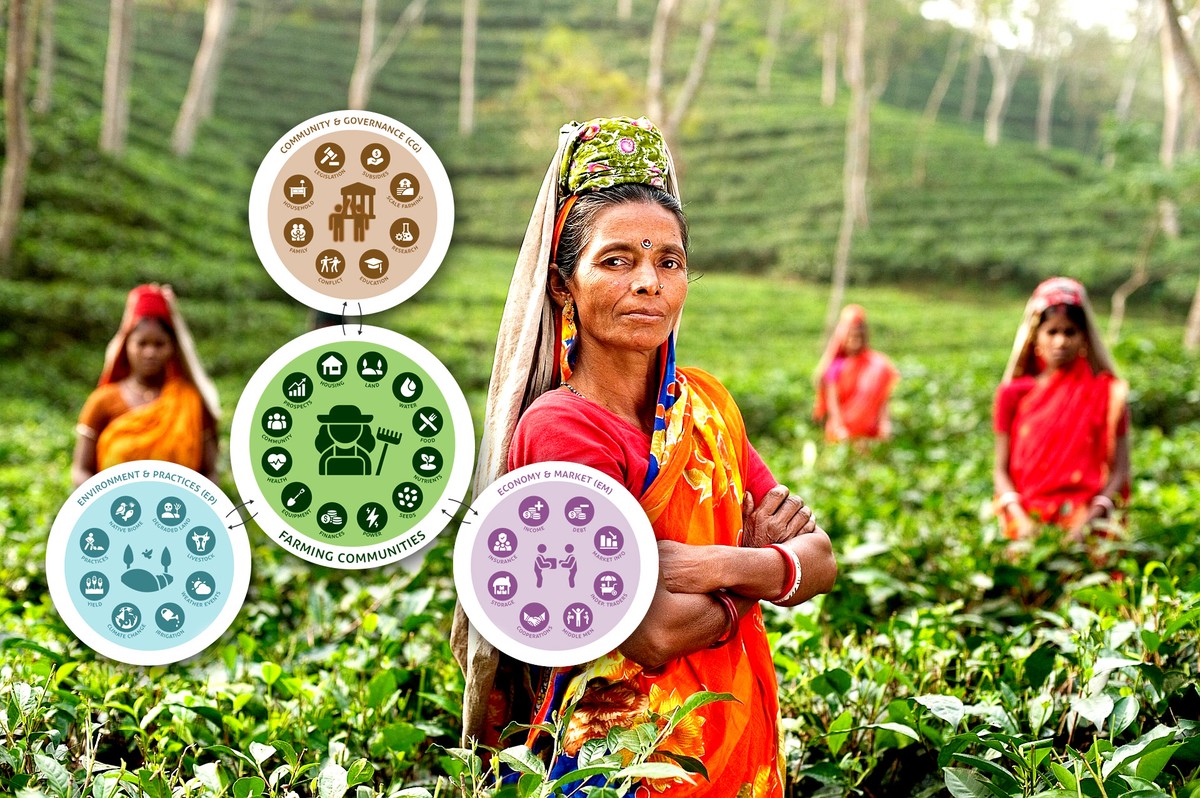
Mapping the livelihood system
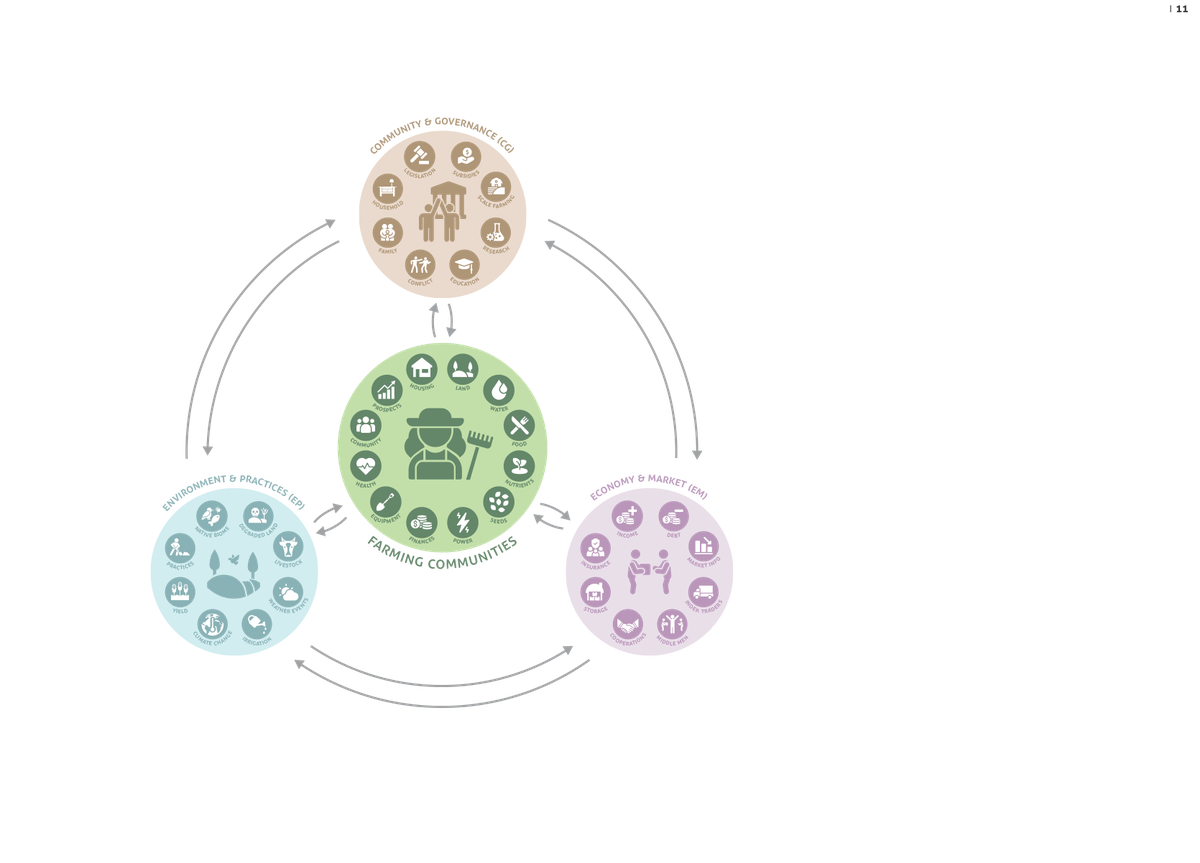
The engagement began with system mapping. Using SiD's analytical tools, the team mapped the complete system within which smallholder farmers in their target regions operate. This was not a value chain analysis or a stakeholder map. It was a dynamic model of the relationships between natural capital (soil, water, biodiversity), human capital (skills, health, social networks), economic structures (markets, credit, land tenure), and institutional arrangements (governance, policy, cultural norms).
The mapping process revealed several features of the system that project-based grantmaking systematically misses. First, the most binding constraints on smallholder livelihoods were often not the ones that projects targeted. Training programs improved farmer knowledge, but if market access remained constrained, improved knowledge did not translate into improved income. Input distribution increased yields, but if storage and transport infrastructure was inadequate, the additional production was lost before it reached a buyer.
Second, the interactions between constraints mattered more than the constraints themselves. Water access affected soil management, which affected yield, which affected income, which affected the ability to invest in water infrastructure. These feedback loops meant that addressing any single constraint in isolation produced temporary improvement that the system eroded over time. Durable change required shifting multiple constraints simultaneously, or identifying the leverage points where a single intervention could break a negative feedback loop.

From projects to leverage points
Two co-creation workshops with the Agricultural Livelihoods team translated the system maps into a strategic framework for grantmaking. The framework identified leverage points: places in the system where philanthropic investment could produce cascading effects beyond the direct outputs of the funded activity.
Some leverage points were structural: investments in market infrastructure that reduced post-harvest losses, creating income gains that funded further investment without ongoing grant support. Others were informational: investments in data systems that made soil conditions, weather patterns, and market prices visible to smallholders, enabling better decisions at the farm level. Others were institutional: investments in farmer cooperatives that changed the bargaining position of smallholders relative to buyers, shifting the distribution of value in the supply chain.
The framework gave the team a method for evaluating grant proposals against systemic criteria: does this investment target a leverage point? Does it create self-reinforcing dynamics that persist after the grant ends? Does it strengthen connections between actors in the system, or does it create a dependency on the funder?
Systemic grantmaking as a practice
Systemic grantmaking is an emerging field. The IKEA Foundation's Agricultural Livelihoods team is among its pioneers. The tools developed during this engagement, system maps, leverage point analysis, portfolio evaluation criteria, are designed to be used and refined over time, not applied once and filed away.
The team also developed communication materials that translate the systemic perspective into language that works for internal stakeholders and external partners. This is harder than it sounds. Systems thinking is intuitive when you see the maps. It is abstract when you describe it in a board memo. The communication tools bridge that gap, making the strategic logic of systemic grantmaking accessible to decision-makers who have not participated in the mapping process.
The implications extend beyond the IKEA Foundation. Philanthropic capital is one of the few sources of patient, flexible funding available for systemic change. If grantmaking can be structured to target leverage points rather than direct outputs, the same resources produce fundamentally different results. The IKEA Foundation's Agricultural Livelihoods program is testing that proposition. The early evidence suggests it works.
The deeper lesson is methodological. Development organizations and foundations routinely commission theory-of-change documents. These documents typically describe a linear causal chain from inputs to outputs to outcomes to impact. The system maps produced in this engagement describe something different: a web of reinforcing and balancing loops, time delays, and threshold effects. The difference matters because the linear model predicts proportional results (more inputs, more impact), while the systems model predicts non-linear results (the same input in a different location produces a different magnitude of effect). Grantmaking informed by systems maps allocates capital to the locations in the system where the magnitude of effect is highest. That is the core of systemic grantmaking, and it is what this engagement helped the IKEA Foundation's team learn to do.
More case studies
Regenerative agriculture at national scale in Egypt


Designing a regenerative neighborhood from first principles
Ready to map your system?
Every case begins with a conversation about the system you operate in and the leverage points within it.
Book an introduction