
What systemic strategy actually means
Conventional strategy optimizes for a model of the world. Systemic strategy works on the world itself, tracing causes, feedbacks, and time delays to find where small interventions produce large, durable results.
In the 1950s, the city of Hanoi offered a bounty for rat tails. The colony rat population was a sanitation problem, the city had limited enforcement capacity, and paying citizens per tail seemed like an efficient solution. The program worked, briefly. Then enterprising residents began breeding rats. The tail supply expanded; the rat population did not fall. When the bounty ended, the rat farms released their stock into the streets. Hanoi had more rats than it started with.
This is not a story about policy incompetence. It is a story about what happens when you optimize for a metric instead of understanding the system that produces the metric. Rat tails were a proxy for rat population. But the system that governed rat population was not the same as the system that governed rat tail supply. By treating the proxy as the target, the intervention created new behavior it had not anticipated and could not control.
Most organizational strategy is a version of the rat tail problem. Not because executives are naive, but because the systems that organizations operate within are genuinely complex, and the tools we use most often for strategy, trend extrapolation, competitive benchmarking, and scenario planning against discrete variables, were designed for simpler problems. They work well when the future resembles the past and when cause and effect are closely coupled in time and space. When those conditions break down, conventional strategy produces confident plans built on assumptions that no longer hold.
If we are to use the world wisely, we need to understand how it actually works, not how we assume it works, and the gap between those two things is where most strategic error lives.E.O. Wilson, biologist and naturalist
What makes a system complex
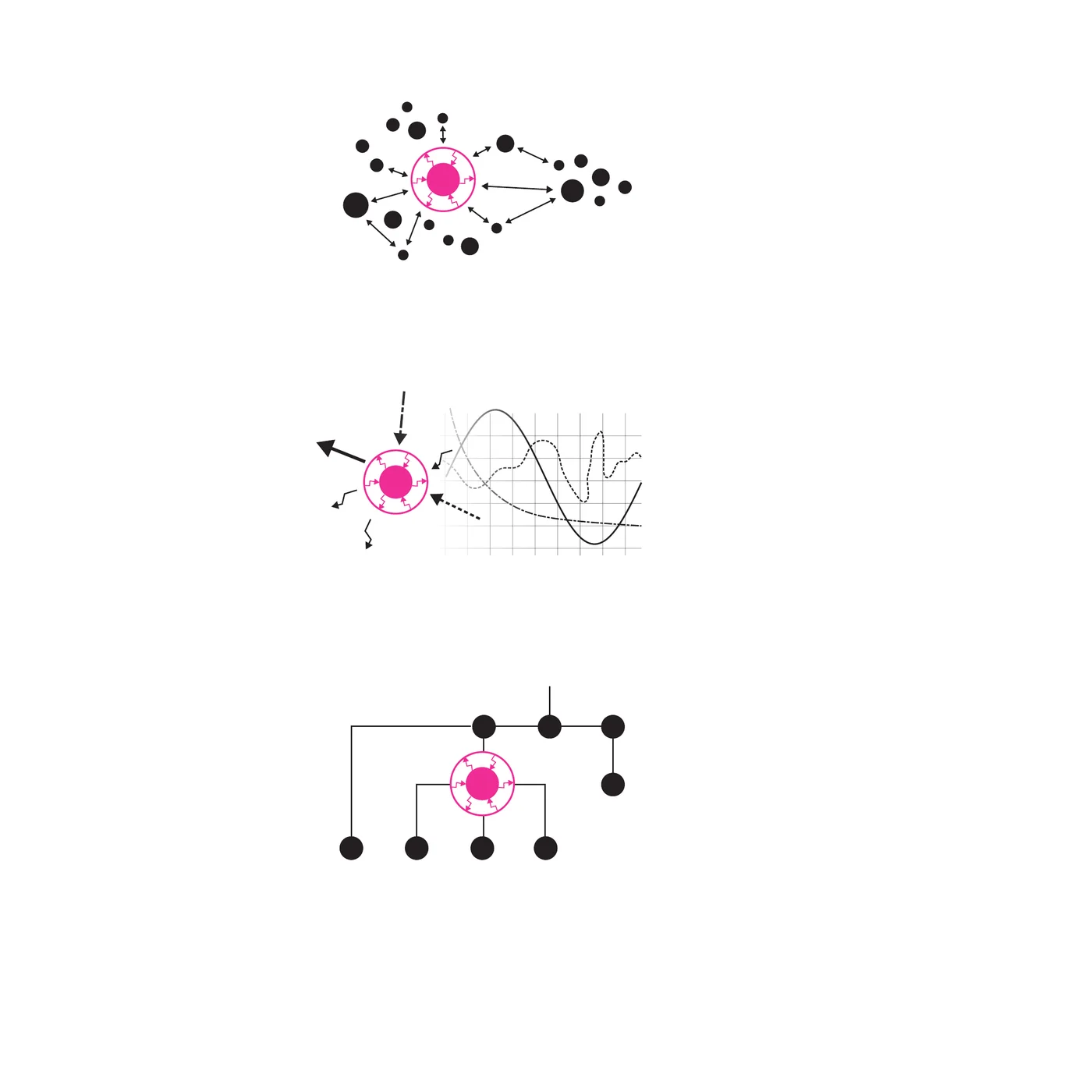
The word “complex” has been so thoroughly diluted by management literature that it has come to mean simply “difficult” or “involving many parts.” This is not what it means in the sense that matters for strategy. A system is complex when its behavior emerges from the interaction of its components rather than being simply the sum of them, when feedback loops cause effects to circle back and change the conditions that produced them, and when time delays separate causes from consequences in ways that make intuition unreliable.
Most of the systems that organizations depend on have these properties. Supply chains, regulatory environments, consumer behavior, material flows, ecological services, labor markets: all of them contain feedback, non-linearity, and time delay in ways that make simple extrapolation dangerous. The standard tools of business strategy treat these systems as static backdrops against which competition plays out. Systemic strategy treats them as the subject of analysis.
The Symbiosis in Development (SiD) framework, developed by Except Integrated Sustainability since 1999 and refined across more than 600 projects on six continents, begins with a question that most strategy processes never ask: what is the actual state of the system this organization depends on? Not the industry, not the market, not the regulatory landscape in isolation, but the ecological, social, and institutional systems that provide the real inputs and absorb the real outputs of what the organization does.
The shattered trend problem
Conventional planning assumes that trends extrapolate. Revenue grows because it has been growing. Regulations tighten incrementally. Technology diffuses on historical curves. This assumption was defensible in periods of relative stability, when the structural conditions that produced the trends were themselves stable.
We are not in such a period. Climate forcing, biodiversity loss, resource constraint, geopolitical fragmentation, and rapid technological change are not individual trends to be tracked and responded to. They are changes in the foundational conditions that made past trends possible. When foundational conditions shift, trend extrapolation does not just produce inaccurate forecasts; it produces systematically misleading ones, because the model underlying the forecast has ceased to correspond to reality.
The practical consequence for strategy is that organizations need to reason from first principles about what their operations require, rather than from backward-looking projections about what the market will provide. This is not a philosophical preference. It is a methodological necessity when the environment contains discontinuities.

From analysis to leverage
Systemic analysis does not produce a comprehensive map of everything. It produces a prioritized understanding of where the system is most sensitive to intervention. Donella Meadows, whose work on leverage points in systems remains foundational, identified a hierarchy: changing the flows within a system produces modest results; changing the feedback loops governing those flows produces larger ones; changing the goals of the system produces the largest results of all, because goals determine what the feedback loops are trying to achieve.
The practical implication is that systemic strategy is not about doing more of everything. It is about finding the structural points where change in one place reorganizes the behavior of the whole. In organizational terms, this might be a governance threshold that triggers reallocation of capital. A supplier relationship that, if restructured, changes the incentive architecture of an entire supply chain. A product design choice that moves material flows from linear to circular, removing an entire category of cost and risk from the system.
These leverage points are not obvious from within the conventional strategic frame. They become visible when you trace the causal chains, map the feedback loops, and identify where the system’s behavior is most sensitive to change. This is the work of systemic analysis, and it is why strategy that begins with the system produces different, more durable interventions than strategy that begins with the spreadsheet.

What systemic strategy does differently
In practice, systemic strategy differs from conventional strategy in four respects. First, it defines the goal in relation to real-world conditions rather than peer benchmarks. Context-based goals, derived from the actual state of the ecological and social systems the organization depends on, are more stable than targets derived from industry averages, because the conditions that define them are more stable than competitive dynamics.
Second, it designs portfolios rather than single initiatives. Because complex systems contain multiple leverage points, and because the interactions between them matter, systemic strategy produces a set of coordinated interventions designed to reinforce each other rather than a ranked list of projects. Portfolio thinking allows an organization to move on multiple fronts simultaneously and to adjust as it learns.
Third, it builds learning loops into the design from the start. Systems change as you intervene in them, and the intervention itself generates information that could not have been available at the outset. Systemic strategy specifies the monitoring indicators, the trigger thresholds, and the decision authorities in advance, so that adaptation is structured rather than reactive.
Fourth, it distinguishes between what an organization can achieve alone and what requires coordinated action with others. Many of the most important leverage points in the systems organizations depend on are beyond any single actor’s control. Systemic strategy identifies where multi-stakeholder coordination is necessary and designs for it, rather than treating it as someone else’s problem.
The Hanoi rat-tail program failed not because the city lacked resources or commitment, but because the people who designed it optimized for a proxy rather than understanding the system that produced it. The organizations that navigate the next decade successfully will be the ones that invest in understanding the systems they depend on before designing the interventions that are meant to shape them.